
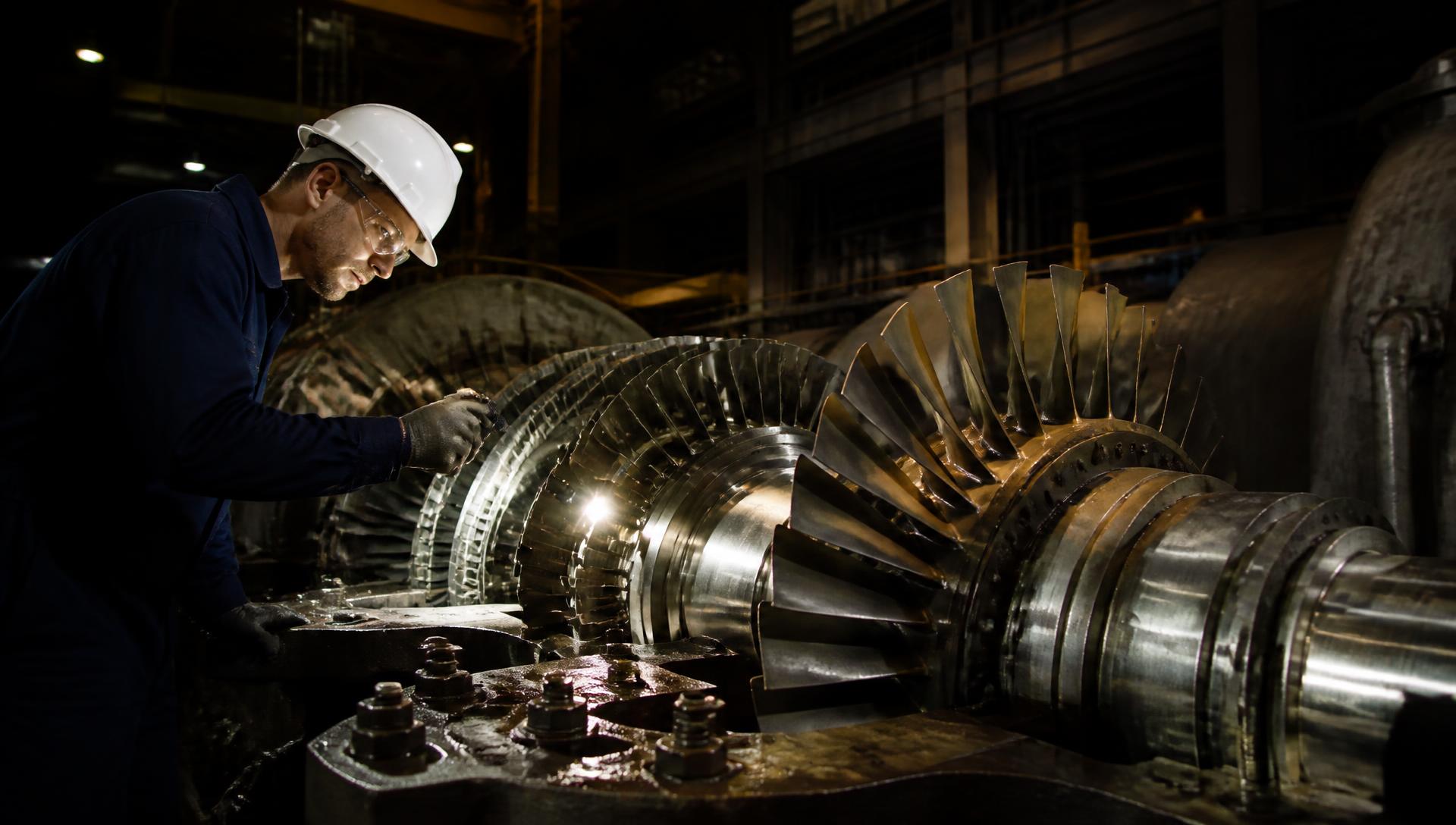
Failure & Forensics
Mechanical, Power Systems, Codes & Failure Analysis
Principal technical integration capability spanning mechanical systems, power generation and mission critical infrastructure, machinery, pressure equipment, piping, codes and standards, failure analysis, root cause investigation, mechanical integrity, technical due diligence, and multidisciplinary engineering leadership.
20+ years across industrial and mission critical environments
- UEI
- ZR3PJZEA7A21
- CAGE
- 174X8
- Independence
- Findings challenged before release
- Deployment
- Remote response within 24 hours
What This Discipline Covers
Scope of the technical capability.
Principal technical integration capability spanning mechanical systems, power generation and mission critical infrastructure, machinery, pressure equipment, piping, codes and standards, failure analysis, root cause investigation, mechanical integrity, technical due diligence, and multidisciplinary engineering leadership.
- Mechanical design and troubleshooting
- Failure analysis, RCA and RCFA
- Pressure vessels, piping, tanks and heat exchangers
- Rotating equipment and turbomachinery
- Power generation, steam and utilities
- Mechanical integrity and reliability interfaces
- Fitness for service and damage evaluation support
- Codes, standards, repair and alteration
- Technical due diligence and CAPEX advisory
- Multidiscipline technical integration
Problems The Technical Lead Solves
The questions this discipline is engaged to answer.
- 01
Equipment failure and RCA
- 02
Mechanical design and code disputes
- 03
Pressure system damage assessment
- 04
Repair, rerate or replace decisions
- 05
Power and utility system technical review
- 06
Asset condition and CAPEX technical due diligence
- 07
Multidisciplinary incident investigations
Equipment And Systems
Assets this Technical Lead has worked on directly.
- Gas and steam turbines
- Pumps and compressors
- Pressure vessels and reactors
- Process piping and pipelines
- Heat exchangers
- Boilers and steam systems
- Tank farms
- Cooling and utility systems
- Data center mechanical and power infrastructure
Industries And Environments
Operating environments where this experience was built.
- Power generation
- Mission critical and data centers
- Oil and gas, SAGD
- Chemical and process
- Pulp and paper
- Industrial manufacturing
Diagnostic And Investigation Methods
How the technical work is actually performed.
- Evidence preservation and chain of custody
- Field examination and dimensional verification
- Fractography and damage mechanism assessment
- Root cause and root cause failure analysis
- Hypothesis testing against operating data
- Engineering calculation and fitness for service screening
Principal Credentials
The basis for the leadership of this discipline.
- Credentials
- Project Management Professional (PMP)
- Education
- MSc, Mechanical Engineering
- Certificate in Finance and Strategy, Harvard Business School Online
- Leadership record
- Former Chief Engineer, major chemical manufacturer
- Major turnaround leadership
- Oversight of 3,000+ engineering design packages across electrical, controls, mechanical, civil and process safety
Tools Capability
The platforms, instruments and measurement methods used on assignments.
These platforms, instruments and methods are used to produce evidence that holds up under audit, underwriting review and cross examination.
Mechanical Stress and Finite Element Analysis
ANSYS Mechanical
Mechanical stress, thermal and structural finite element analysis of pressure parts, rotating components, supports and structures during failure analysis and design verification.
Abaqus
Nonlinear contact, plasticity and large deformation analysis where a component has cracked, buckled or collapsed rather than simply been overstressed.
Computational Fluid Dynamics
ANSYS Fluent
Flow, heat transfer and thermal fluid behavior inside equipment, used to reconstruct erosion, maldistribution, overheating and flow induced failure.
Piping and Pressure Systems
CAESAR II
Piping flexibility, thermal expansion, support loading and ASME B31.1 and B31.3 compliance where piping, nozzles or supports have failed or moved.
Codeware COMPRESS
ASME Section VIII Division 1 and Division 2 vessel calculation used to verify original design basis, repairs and alterations.
Codeware INSPECT
API 579 fitness for service and remaining life assessment of damaged or degraded pressure equipment.
Vent, silencer and discharge design with acoustic and flow sizing
Site specific mechanical design of vent routing, silencing, condensate capture and freeze protection where venting duty has to be preserved without creating an exterior hazard.
ASME Section I and PCC-2 repair route evaluation
Selection and documentation of the boiler repair or alteration route, weld procedure, test scope and return to service requirements.
Process, Thermodynamic and Hydraulic Analysis
Aspen HYSYS
Thermodynamic reconstruction of the operating condition at the time of the event, including phase behavior and equipment duty.
PIPESIM
Multiphase flow modeling where the fluid regime, not the metal, governs how the equipment behaved.
PIPE-FLO
Hydraulic network analysis of pumps, system curves, pressure drop and flow distribution.
Root Cause and Analytical Method
Apollo Root Cause Analysis and TapRooT
Structured cause and effect charting that separates physical, human and latent system causes and shows the evidence behind each link.
Fault tree analysis and event and causal factor charting
Deductive testing of every credible failure path so eliminated hypotheses are documented, not assumed away.
5 Why, Ishikawa, barrier and change analysis
Fast structured screening at the front of an investigation before the analytical work is committed.
3D Capture and Dimensional Evidence
FARO and Leica laser scanning, structured light scanning and photogrammetry
As found capture of distortion, displacement and damage geometry, held as a permanent record and used directly in analysis and exhibits.
Portable CMM and precision micrometry
Component level dimensional evidence where tolerance, fit and clearance are contested.
Remote, Robotic and Visual Access
Videoscope and borescope inspection
Internal condition evidence captured before anything is disassembled or disturbed.
Drone and UAV inspection
Stack, flare, roof, structure and elevated equipment examination without scaffold or shutdown.
Materials and Condition Measurement
Ultrasonic thickness and portable hardness testing
Wall loss and in situ material condition measured with UT and UCI or Leeb instruments.
PMI alloy verification and replication metallography
Confirmation of the installed material and its microstructure without cutting the asset.
Torque, bolt load and clearance verification
Preload and joint integrity measurement where assembly practice is in question.
Asset, Schedule and Analytics Systems
SAP S/4HANA Asset Management
Maintenance history, notification and work order evidence.
Oracle Primavera P6 and Microsoft Project
Turnaround, outage and capital project schedule evidence in loss of production and CAPEX assignments.
Python, SQL and Power BI
Operating data extraction, engineering analytics and evidence visualization.
Evidence Handling and Dispute Support
Chain of custody and evidence preservation protocol
Logged, photographed and sealed handling of recovered components so the physical record stands up under cross examination.
Joint inspection and spoliation protocols
Coordinated examination with other parties where destructive testing or disassembly is required.
BlackOut Power / TerraTolga Proprietary Capability
- Engineering Records Intelligence
Interrogation of drawings, specifications, inspection histories and OEM documents to establish the design and maintenance basis of the failed equipment.
- FMECA Engine
Structuring of failure hypotheses across the system so the investigation covers every credible mode, not only the obvious one.
- TerraTolga PDF / Vault Compare
Revision by revision comparison of drawings and specifications to establish what changed, when and on whose authority.
Codes And Standards
Frameworks applied to the analysis.
- ASME BPVC Sections I, V, VIII and IX
- ASME B31.1 and B31.3
- API 579 fitness for service
- API 510, 570 and 653
- NFPA 921 and NFPA 70E where applicable
- ASME PCC-2 and NBIC repair authority
Credentials And Qualification
The professional basis for this discipline.
- 01
Degreed engineering background with industrial operating experience
- 02
Professional engineering registration or equivalent recognized credentials
- 03
Code and standards qualification relevant to the equipment examined
- 04
Expert report and testimony experience in disputed matters
Scale And Breadth
Reported scale of professional exposure.
- 01
20+ years across industrial and mission critical environments
- 02
20 km steam and emulsion pipeline redesign with $12.7M reported savings
- 03
Chronic vibration redesign reported at $25.2M per year benefit
- 04
Maintenance budgets up to $30M in operating roles
Representative Professional Experience
Assignment types this discipline supports.
- 01
Root cause investigation of a catastrophic rotating equipment failure with recovery planning
- 02
Forensic assessment of pressure boundary rupture including metallurgical and operational analysis
- 03
Multidisciplinary loss investigation coordinating mechanical, electrical, and process specialists
- 04
Independent review of an opposing technical opinion in a contested claim
Assignment descriptions are generalized to protect client confidentiality. Specific references can be discussed during scoping where permissions allow.
Multidisciplinary Interfaces
Disciplines this work commonly coordinates with.
- Reliability & Asset Integrity
- Machinery Engineering
- Vibration
- Inspection & CMMS
- Electrical
- Controls
- Process
- Field Diagnostics
Discuss a mechanical & codes assignment.
Initial conversations are confidential and without obligation. We will confirm independence before scope is discussed.